
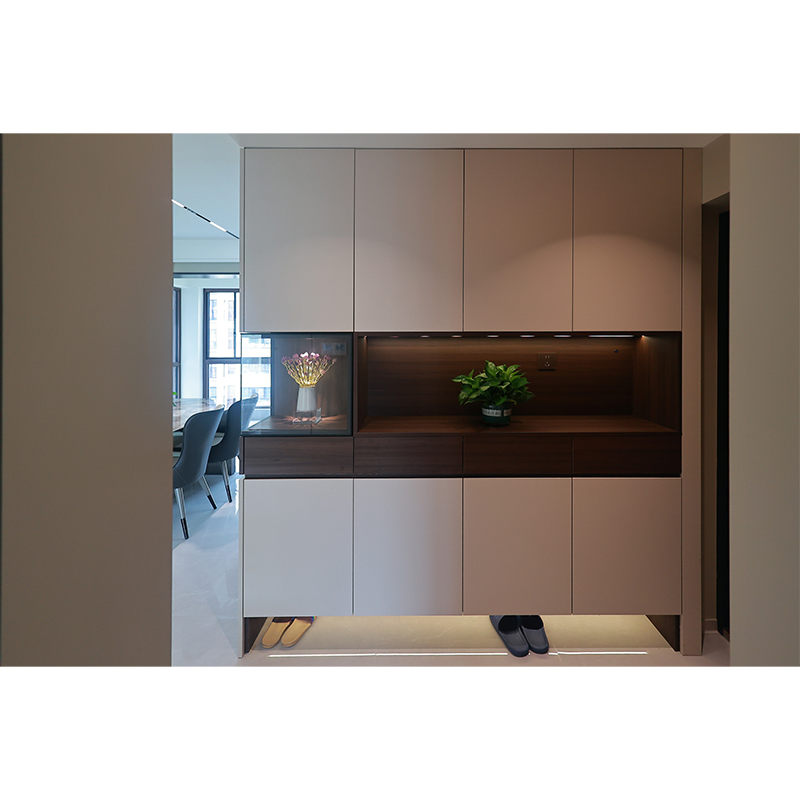
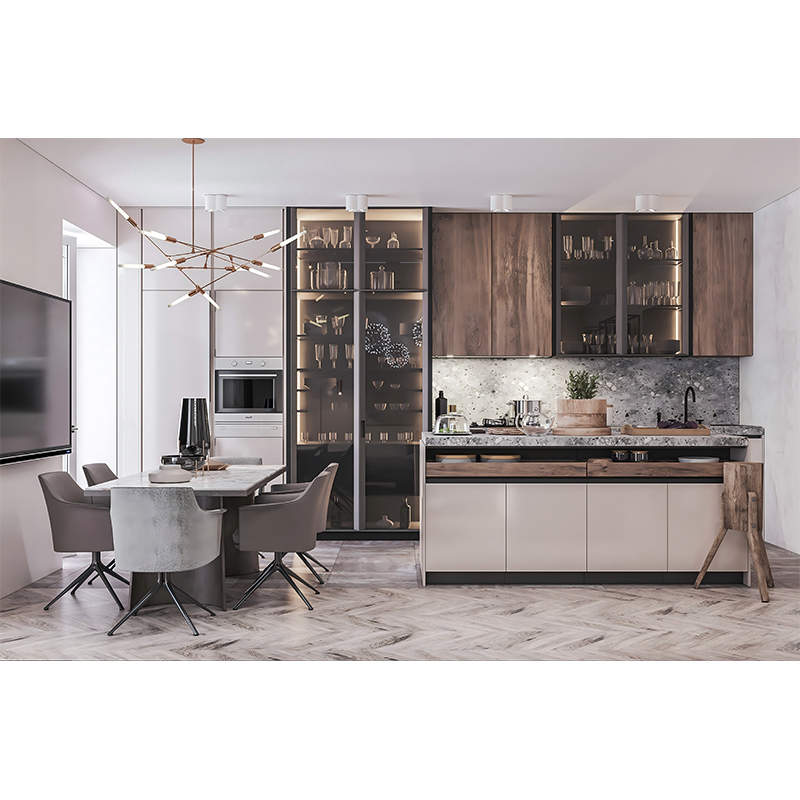
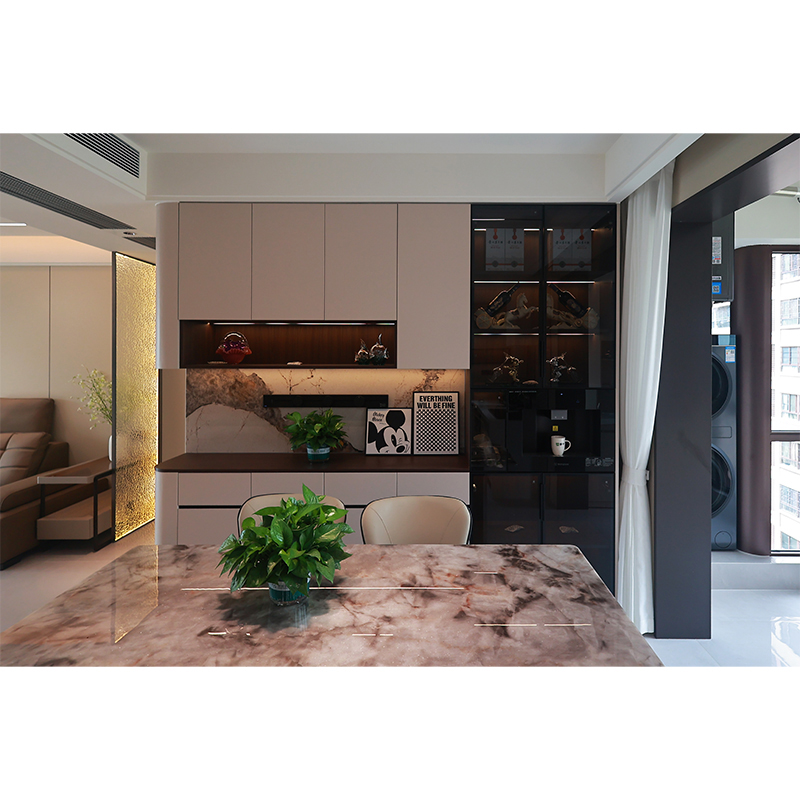
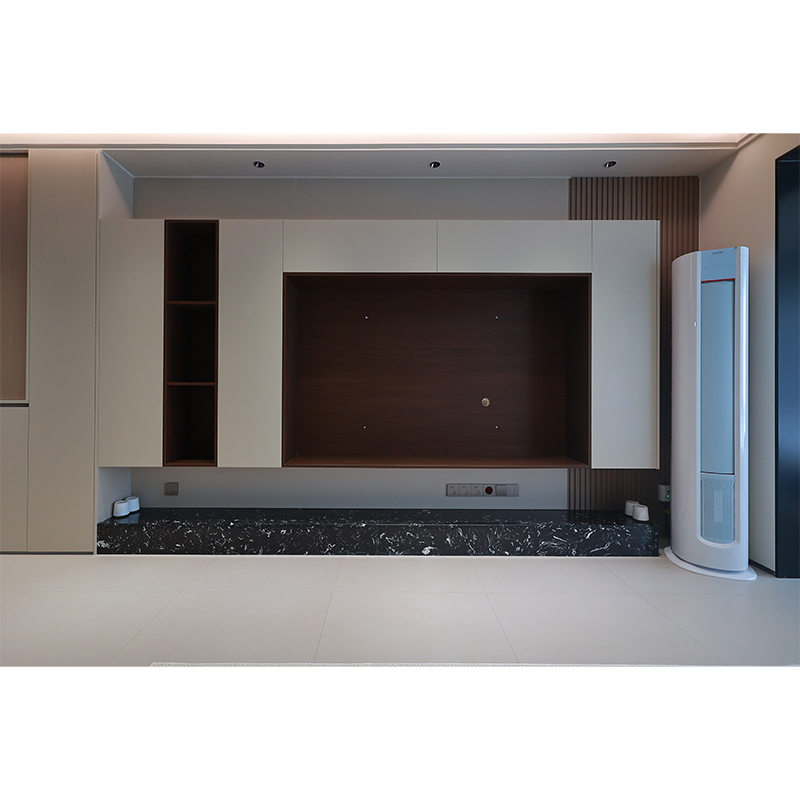


How do Custom Cabinets achieve true "tailor-made" solutions based on space dimensions and user habits?
Release Time : 2026-02-10
In modern home and commercial space design, standardized cabinets, while inexpensive, often result in wasted space or inconvenience due to size mismatches and functional mismatches. In contrast, Custom Cabinets, centered on "space adaptation" and "human-centered experience," transforms every inch of space potential into efficient, aesthetically pleasing, and personalized storage solutions through precise measurement, in-depth communication, and flexible manufacturing.
1. Millimeter-Level Space Measurement: Full-Dimensional Adaptation from Walls to Pipelines
True customization begins with utmost respect for the physical space. Professional designers carry laser rangefinders, levels, and even 3D scanning equipment to conduct a comprehensive on-site survey, recording not only length, width, and height, but also paying attention to details such as wall tilt, floor flatness, beam and column positions, sockets and switches, heating pipes, and door and window opening paths. For example, a seemingly square kitchen corner may have a 2-3 cm vertical deviation due to old building settlement; bathroom cabinets need to avoid hidden water supply and drainage pipes. This data is imported into CAD or BIM systems to generate 1:1 digital models, ensuring a seamless fit and eliminating the rough treatment of "leaving gaps and applying glue," achieving a balance between visual neatness and structural stability.
2. User Behavior Insights: From Lifestyle Habits to Flow Optimization
Customization is not just about "making cabinets," but about "designing a lifestyle." Based on this information, the internal structure of the cabinets is meticulously planned: high-frequency items are concentrated in the prime work area; rotating pull-out baskets or UFO-shaped shelves are used in corners to improve accessibility; drawer dividers are customized according to tableware and tool types; even the color temperature of the lighting is matched to the usage scenario. This "human-centered" design transforms storage from passive storage to proactive service.
3. Modular System + Flexible Production: Balancing Individuality and Efficiency
To balance high customization with industrialized production, high-end custom brands generally adopt "modular parametric design systems." The cabinets are composed of standard units, but the doors, shelves, and hardware can all be adjusted as needed. For example, a 2.38-meter-wide wall can be disassembled into four modules: 60+60+60+58cm, avoiding waste from cutting; the height can be finely adjusted using adjustable feet or a top panel. The back-end MES manufacturing system automatically analyzes order data, driving CNC cutting, edge banding, and drilling equipment to achieve "one-piece first-class" production, ensuring both precision and cost control.
4. Material and Aesthetic Synergy: Style, Function, and Environmental Protection in One
Custom cabinets also need to match the overall decoration style and environmental protection requirements. Users can choose solid wood, multi-layer board, or particleboard as the base material, paired with PET skin-feel film, wood veneer, or painted finishes; countertops can be made of quartz stone, slab stone, or stainless steel. More importantly, environmental protection levels and hardware brands are transparently selectable. Designers will suggest: moisture-resistant boards + aluminum frame doors for damp areas, rounded corners + soft-close hinges for children's rooms, and smart sensor lights for display cabinets—materials are not just for appearance, but also for functionality.
5. Installation and After-Sales Service: The Last Mile of the Customization Closed Loop
Even the most perfect design needs precise implementation. A professional team assembles the cabinets according to their serial numbers, using specialized leveling tools to ensure they are perfectly horizontal and vertical; the finishing strips and baseboards seamlessly connect to the wall. Some brands offer AR previews, progress tracking, and a five-year warranty, giving users complete peace of mind.
Custom Cabinets' "tailor-made" approach is far more than simply cutting boards to size; it's a systematic project integrating spatial science, ergonomics, manufacturing processes, and lifestyle aesthetics. It transforms cabinets from mere furniture into "space partners" that understand your habits, adapt to your rhythm, and integrate into your life. In an era where every inch of space is precious, true luxury lies in treating every cubic centimeter with care.
1. Millimeter-Level Space Measurement: Full-Dimensional Adaptation from Walls to Pipelines
True customization begins with utmost respect for the physical space. Professional designers carry laser rangefinders, levels, and even 3D scanning equipment to conduct a comprehensive on-site survey, recording not only length, width, and height, but also paying attention to details such as wall tilt, floor flatness, beam and column positions, sockets and switches, heating pipes, and door and window opening paths. For example, a seemingly square kitchen corner may have a 2-3 cm vertical deviation due to old building settlement; bathroom cabinets need to avoid hidden water supply and drainage pipes. This data is imported into CAD or BIM systems to generate 1:1 digital models, ensuring a seamless fit and eliminating the rough treatment of "leaving gaps and applying glue," achieving a balance between visual neatness and structural stability.
2. User Behavior Insights: From Lifestyle Habits to Flow Optimization
Customization is not just about "making cabinets," but about "designing a lifestyle." Based on this information, the internal structure of the cabinets is meticulously planned: high-frequency items are concentrated in the prime work area; rotating pull-out baskets or UFO-shaped shelves are used in corners to improve accessibility; drawer dividers are customized according to tableware and tool types; even the color temperature of the lighting is matched to the usage scenario. This "human-centered" design transforms storage from passive storage to proactive service.
3. Modular System + Flexible Production: Balancing Individuality and Efficiency
To balance high customization with industrialized production, high-end custom brands generally adopt "modular parametric design systems." The cabinets are composed of standard units, but the doors, shelves, and hardware can all be adjusted as needed. For example, a 2.38-meter-wide wall can be disassembled into four modules: 60+60+60+58cm, avoiding waste from cutting; the height can be finely adjusted using adjustable feet or a top panel. The back-end MES manufacturing system automatically analyzes order data, driving CNC cutting, edge banding, and drilling equipment to achieve "one-piece first-class" production, ensuring both precision and cost control.
4. Material and Aesthetic Synergy: Style, Function, and Environmental Protection in One
Custom cabinets also need to match the overall decoration style and environmental protection requirements. Users can choose solid wood, multi-layer board, or particleboard as the base material, paired with PET skin-feel film, wood veneer, or painted finishes; countertops can be made of quartz stone, slab stone, or stainless steel. More importantly, environmental protection levels and hardware brands are transparently selectable. Designers will suggest: moisture-resistant boards + aluminum frame doors for damp areas, rounded corners + soft-close hinges for children's rooms, and smart sensor lights for display cabinets—materials are not just for appearance, but also for functionality.
5. Installation and After-Sales Service: The Last Mile of the Customization Closed Loop
Even the most perfect design needs precise implementation. A professional team assembles the cabinets according to their serial numbers, using specialized leveling tools to ensure they are perfectly horizontal and vertical; the finishing strips and baseboards seamlessly connect to the wall. Some brands offer AR previews, progress tracking, and a five-year warranty, giving users complete peace of mind.
Custom Cabinets' "tailor-made" approach is far more than simply cutting boards to size; it's a systematic project integrating spatial science, ergonomics, manufacturing processes, and lifestyle aesthetics. It transforms cabinets from mere furniture into "space partners" that understand your habits, adapt to your rhythm, and integrate into your life. In an era where every inch of space is precious, true luxury lies in treating every cubic centimeter with care.