


How does the ventilation system design of a custom wine cabinet ensure air circulation inside the cabinet?
Release Time : 2026-01-13
The ventilation system design of a custom wine cabinet is crucial for ensuring air circulation and maintaining a stable storage environment for wines. Its design must balance the synergy of natural and mechanical ventilation, while also considering airflow path planning, air filtration and purification, and temperature and humidity balance control to achieve precise microclimate regulation within the cabinet.
Natural ventilation is the foundation of a custom wine cabinet's ventilation system, its core being the passive exchange of air achieved through the scientific placement of vents. Designers must determine the number and location of vents based on the wine cabinet's placement (e.g., against a wall, embedded in a wall, or freestanding). For example, for freestanding wine cabinets, symmetrical vents can be placed at the top and bottom, utilizing the principle of hot air rising and cold air sinking to create natural convection circulation. Embedded wine cabinets, on the other hand, require ventilation gaps at the back or sides to avoid airflow obstruction caused by close contact with the wall. The shape and size of the vents need to be optimized through fluid dynamics simulation, typically employing elongated or honeycomb designs to ensure sufficient airflow area while preventing dust or insects from entering the cabinet. In addition, removable dust filters can be installed inside the vents for regular cleaning to maintain ventilation efficiency.
Mechanical ventilation enhances airflow through built-in fans or exhaust systems, making it particularly suitable for large custom wine cabinets or environments with stringent temperature and humidity control requirements. The fan selection must match the wine cabinet's volume; low-noise, high-airflow axial fans are typically used, installed at the bottom or top of the cabinet to accelerate air circulation through forced airflow. Some high-end custom wine cabinets employ a dual-fan system, one for intake and one for exhaust, creating a directional airflow channel to avoid dead air zones within the cabinet. Fan start-up and shutdown can be intelligently controlled using temperature and humidity sensors, automatically activating when humidity exceeds a threshold or temperature fluctuates to quickly adjust environmental parameters. Simultaneously, fan speed must be adjustable to adapt to different seasons or storage stages; for example, lower speeds in winter to reduce energy consumption, while higher speeds in summer enhance dehumidification.
Airflow path planning is crucial for ventilation system design, ensuring air flows from clean areas to contaminated areas to prevent cross-contamination. Custom wine cabinets typically place air inlets at the bottom or back of the cabinet, close to a clean air source such as the floor or wall, while exhaust vents are located at the top or front to facilitate the expulsion of hot and humid air. The airflow path must avoid the bottle storage area to prevent direct drafts that could cause labels to detach or fluctuations in wine temperature. Designers can guide airflow along a predetermined path by installing deflectors or airflow baffles inside the cabinet. For example, leaving ventilation gaps under the shelves allows air to flow upwards around the bottles, forming an "S"-shaped circulation path. This design ensures airflow while minimizing direct interference with the wine.
Air filtration and purification are an important supplement to the ventilation system, especially suitable for humid or dusty environments. Custom wine cabinets can be equipped with activated carbon filters or HEPA filters at the air inlets or exhaust vents to effectively absorb odors, mold spores, or dust particles from the air, preventing external contaminants from entering the cabinet. Some wine cabinets are also equipped with ultraviolet germicidal lamps, which use short-wave ultraviolet light to destroy the DNA structure of microorganisms, inhibiting the growth of mold or bacteria, especially suitable for long-term storage of aged wines. The filter needs to be replaced or cleaned regularly to maintain its purification efficiency and prevent increased ventilation resistance due to blockage.
Balanced temperature and humidity control is the ultimate goal of the ventilation system. Through the linkage between the ventilation system and the cooling/heating modules, a custom wine cabinet can achieve dynamic balance of temperature and humidity within the cabinet. For example, when humidity is too high, the ventilation system accelerates air exchange, working with the dehumidification module to reduce humidity; when temperature fluctuates, the ventilation system adjusts airflow speed to assist the temperature control system in quickly stabilizing the temperature. Some smart wine cabinets are also equipped with a microprocessor control system that automatically sets the optimal temperature and humidity range based on the type of wine (such as red wine, white wine, or champagne) and precisely regulates it through the ventilation system, providing a customized storage environment for different wines.
Furthermore, noise control of the ventilation system is also crucial. Designers need to reduce operating noise by optimizing fan blade shape, using vibration-damping brackets, or adding sound insulation materials to ensure that the wine cabinet does not disturb the user's life during ventilation. Simultaneously, the energy consumption of the ventilation system must be balanced with the overall energy efficiency of the wine cabinet to avoid frequent start-stop cycles of the cooling/heating modules due to excessive ventilation, which increases energy consumption.
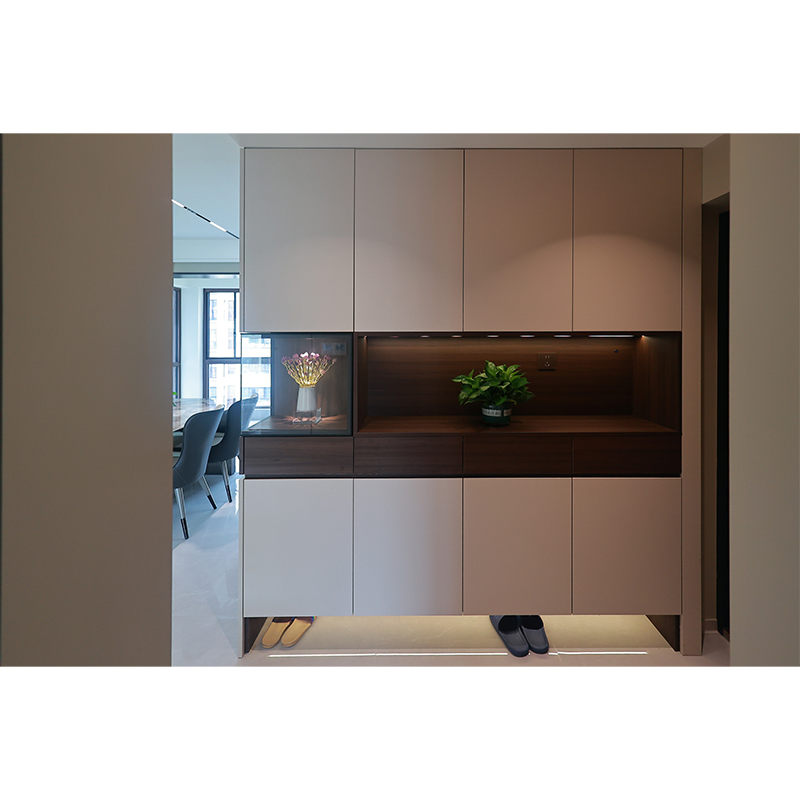
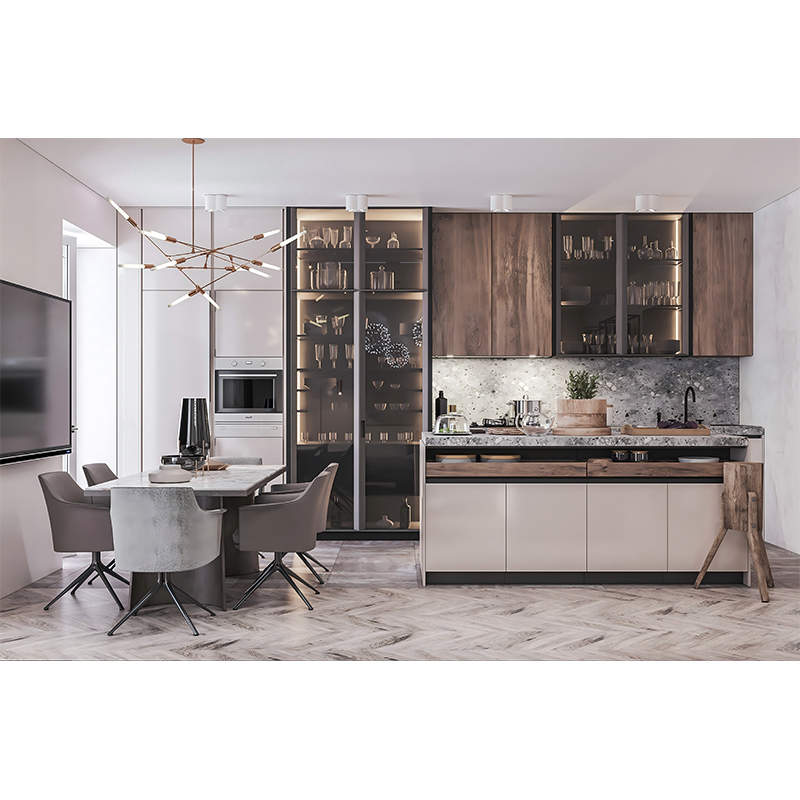
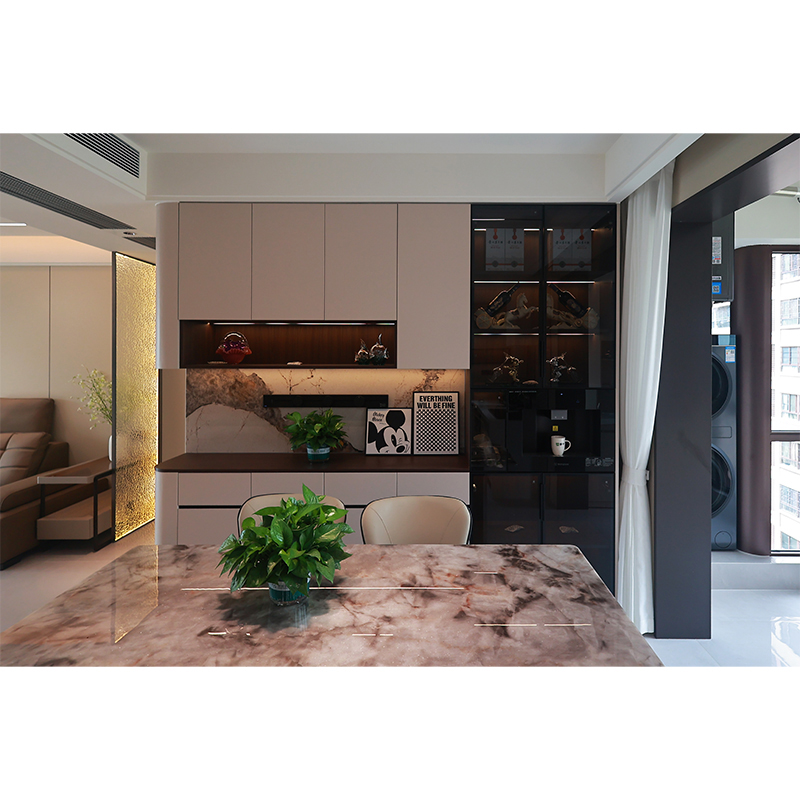
Finally, the ventilation system design of a custom wine cabinet needs to be deeply integrated with the cabinet structure. For example, in a wooden wine cabinet, the vents should coordinate with the wood grain to avoid disrupting the overall aesthetics; in a metal or glass wine cabinet, the vents can be concealed, their presence minimized through lines or lighting. Designers also need to consider the maintainability of the ventilation system, ensuring users can easily remove dust filters or replace the filters, extending the wine cabinet's lifespan.